How mm-lab handles up to 300 support tickets a week with Easy8, on its own servers
Visit website
mm-lab GmbH, founded in 2005 and based in Kornwestheim, Germany, develops telematics solutions for the automotive industry and municipal services. Its portfolio includes the Proving Ground Management System (PGMS) for planning, booking, billing, monitoring and safety on vehicle test tracks, telematics for municipal special-purpose fleets such as street cleaning, road maintenance and irrigation, and engineering and consulting services including software development, system integration, project management, process design and training.
Introduction
The company run its projects, customer support and internal know-how in Easy8 since 2017. Over the years the team has become more than a user: it now trains other organisations, including German public authorities, in how to use the tool well.
Previous state
Telematics projects at mm-lab are intense and varied. Each customer has its own setup; a project needs a lot of effort for a certain period, and once the team delivers it, the engineers move on to engineering assignments until the next telematics project starts. Keeping this rhythm transparent required one place that records every project, task, document, and hour of work.
Until 2017, the company managed its projects in Phproject, an open-source project management tool. When the C-level looked for a more capable replacement, mm-lab compared several alternatives and migrated its project work to Easy8 as a result.
Why Easy8
Easy8 stood out in the evaluation for its broad functionality and its flexibility. mm-lab could shape it into very different projects and customers and still keep everything in one system.
Data control mattered too. mm-lab works under strict internal security rules: it is ISO 27001 certified and holds a TISAX certification required by an automotive customer.
An on-premises installation keeps project and customer data on mm-lab's own servers. For Andreas Streit, the choice also has a strategic side: a European alternative to American cloud tools is the better long-term option.
Assignment and challenges
Expectations
- One system for all telematics projects, regardless of customer or project type
- Clear planning and transparent time tracking across projects and engineering assignments
- A professional channel for customers to report bugs and issues
- Full control of data through an on-premises installation
- A shared knowledge base to onboard new employees quickly
Requirements
- On-premises deployment
- Project hierarchy, WBS and project planning
- Agile tools: Scrum Board, backlog and sprint planning
- Time tracking adapted to mm-lab's internal rules
- Helpdesk with external helpdesk users for each customer project
- B2B CRM
- Granular user, role and group management
Solution
Implementation
mm-lab implemented Easy8 largely on its own. The team invested a lot of effort in exploring the system, learning how it works, and configuring it to fit its processes.
Andreas Streit became the main administrator and internal expert, supported by two colleagues who also lead training sessions.
Easy8 setup
mm-lab uses the Easy8 platform with the HelpDesk and B2B CRM modules. Each telematics project has its own team, roles and project structure, planned in a Work Breakdown Structure (WBS) and, where useful, run on a Scrum Board.
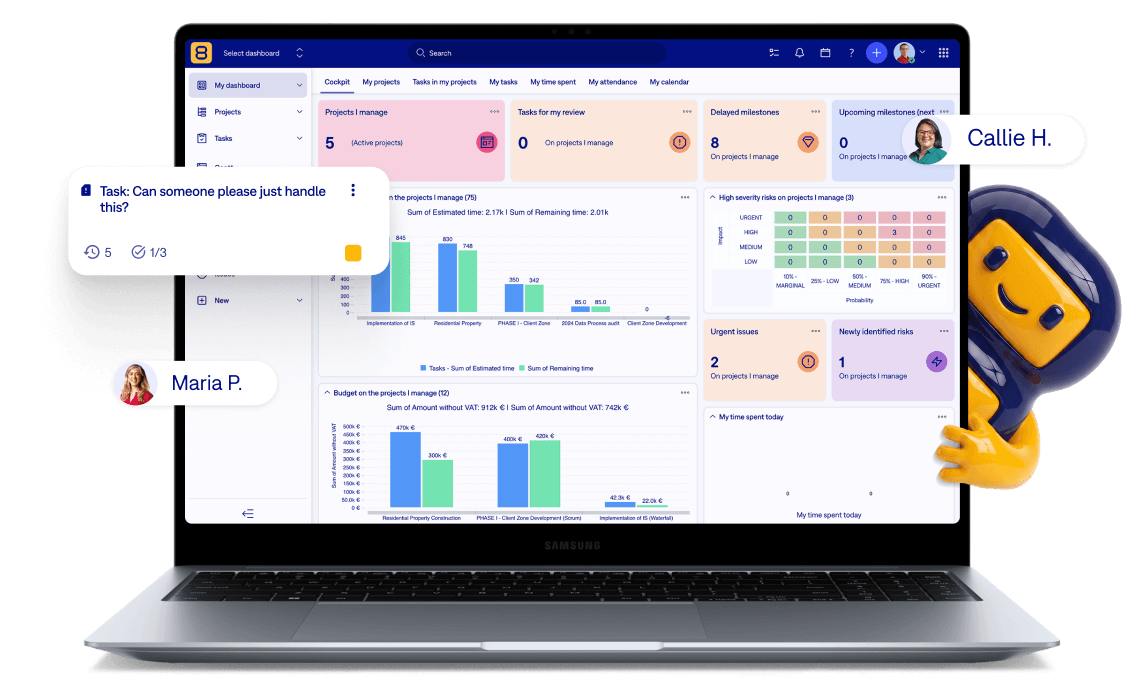
Every customer project has one or two external HelpDesk users on the customer side. They report bugs and issues through a simple HelpDesk dashboard, where they can create new tickets and follow open ones. Employees book spent time according to mm-lab's internal rules, and project managers use dashboards to track progress.
The Knowledge Base held project documentation and process descriptions, for example a description of mm-lab's own issue workflow in Easy8, which new employees use to learn how work is done.
Deployment: On-premises
Easy8 runs on mm-lab's own servers. For a long time the company stayed on version 13 because its know-how lived in the original Knowledge Base, which Easy8 discontinued in version 14. mm-lab then moved its file shares and knowledge base articles to Nextcloud and upgraded to version 15 (15.6 at the time of writing), which gives it access to the latest HelpDesk improvements.
Training
mm-lab built its own Easy8 training programme. It includes course descriptions and scripts, hands-on exercises in a test environment (for example, creating a first project and WBS), and handouts full of screenshots that help trainees recall what they learned.
The team records internal sessions, for example a short video on how to book spent time, so new colleagues can train themselves.
mm-lab also uses the same programme externally. Through a cooperation with Cloudogu, mm-lab has delivered hands-on courses for German ministries looking for a European alternative to cloud-based Jira, as well as a dedicated helpdesk training for a company using Easy8 for customer support.
Testing
The company uses a test environment with test projects and test users, for example to run hands-on training and to check what helpdesk users see.
Evaluation
Easy8 has been mm-lab's project management backbone for almost a decade. All Project Managers and engineers know how to work with it, and the HelpDesk handles 20 to 40 customer tickets a day (200 to 300 a week) across 20 to 30 customer projects.
The experience the team has built is now an asset of its own. mm-lab trains other organisations and plans to have two to three people certified as official Easy8 consultants, which gives the company an additional line of business between telematics projects.
The company has no plans to change its project management tool and is looking for long-term stability with Easy8.
For AI, mm-lab has taken its own route: its development team works with a different AI engine and integrates it with Easy8 queries.
The most used functions
- Projects and project hierarchy
- WBS and project planning
- Scrum board, backlog and sprint planning
- Time tracking
- HelpDesk with external HelpDesk users
- B2B CRM
- User, role and group management
- Dashboards
Conclusion
For mm-lab, Easy8 has grown from a project management tool into the system that holds its projects, customer support and process know-how. Its flexibility lets one small team manage very different telematics projects in one place, and its on-premises deployment meets the company's strict security requirements.
mm-lab's story shows what the No. 1 Private WorkOps Platform means in practice: one system for projects, customer support and know-how, running on the company's own servers and under its own security rules.
The most used functions
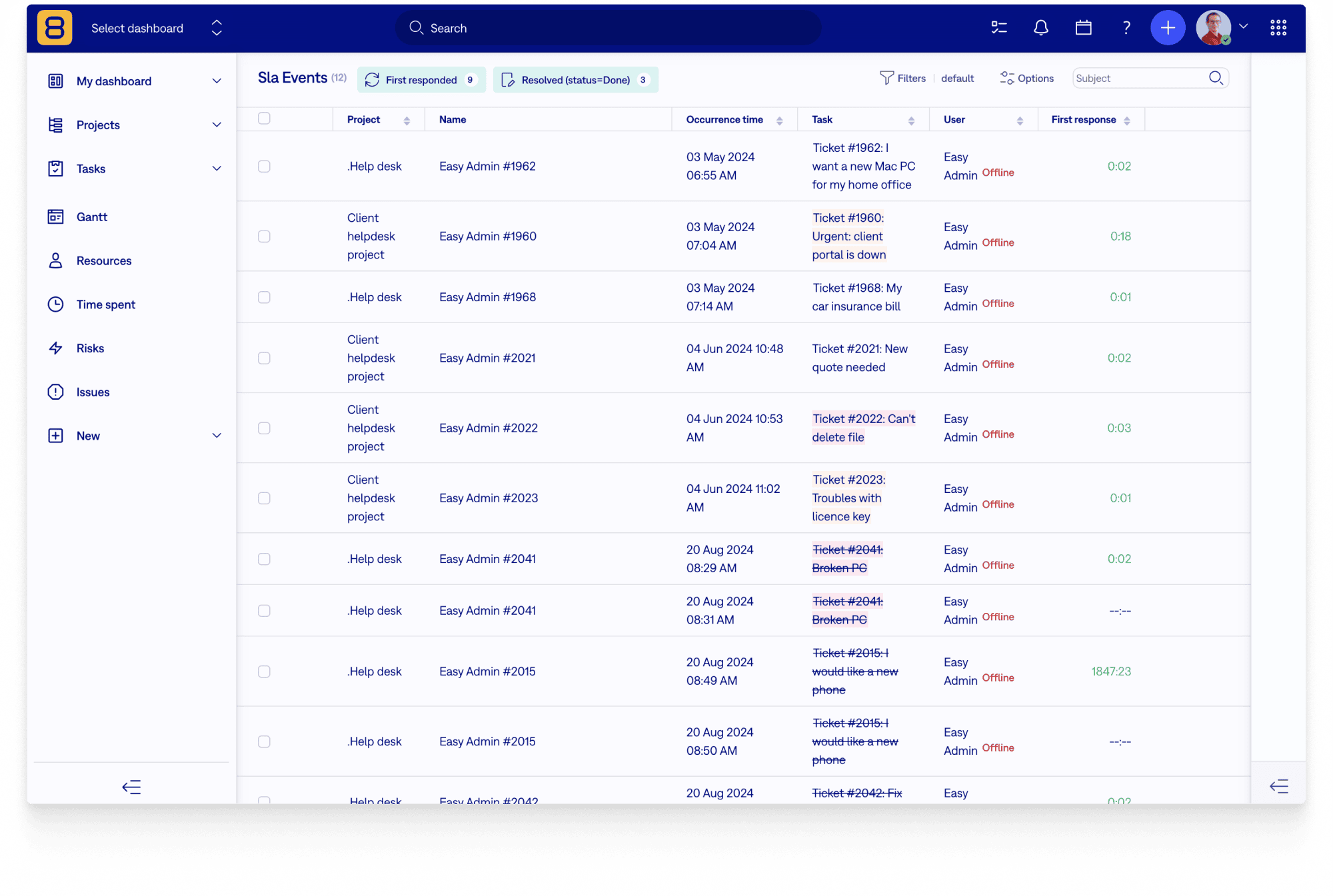
HelpDesk: One channel for customer bug reports and issues, with 20 to 40 tickets a day across 20 to 30 customer projects.
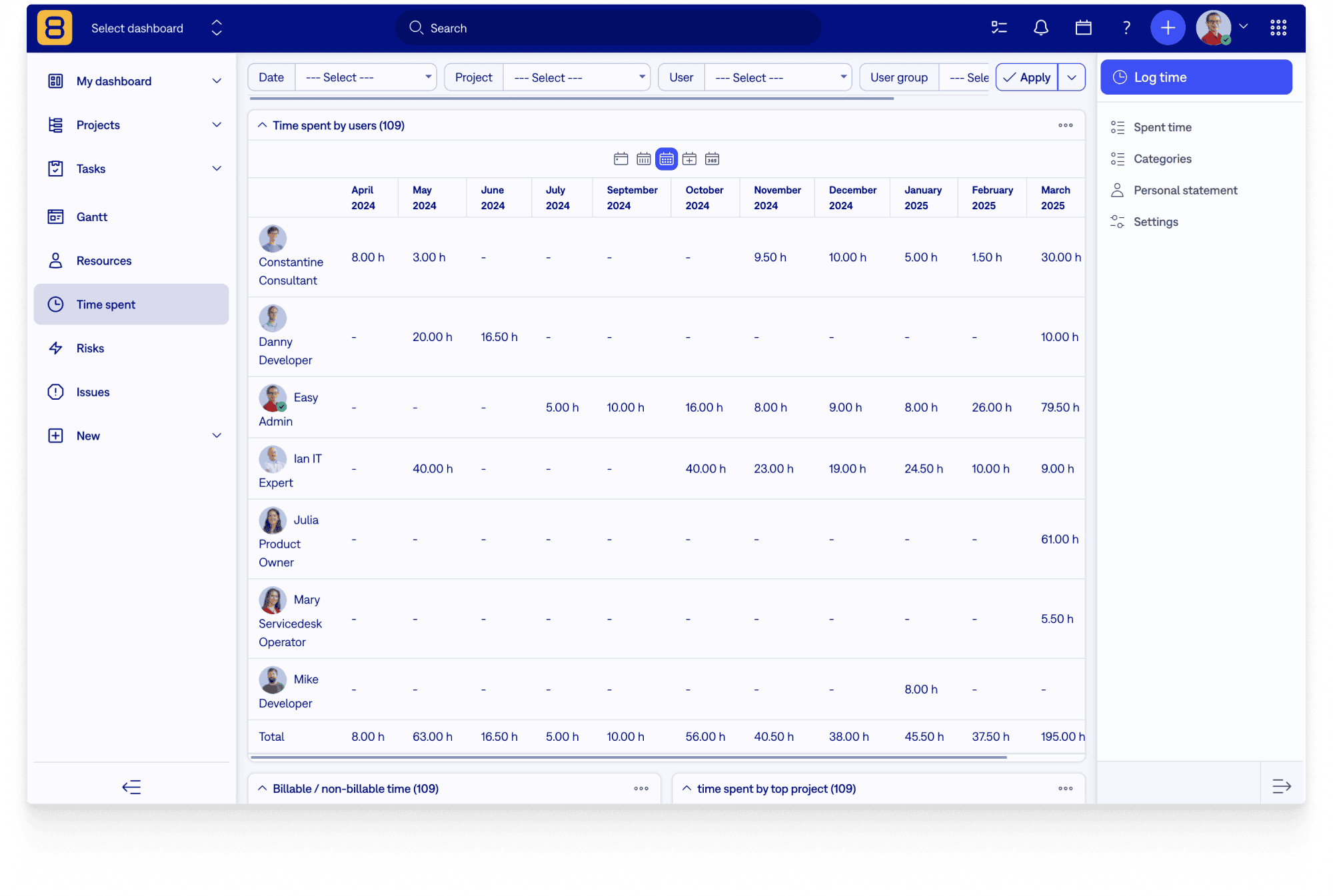
Time tracking: Engineers book spent time against projects and engineering assignments, following mm-lab’s internal rules.
Related case studies

Air gapped by design: On-premises project management software inside EKS InTec's own network
Engineering & IT Services
EKS InTec GmbH, an engineering partner in automotive and industrial automation from Weingarten, Germany, works with customer project data that cannot leave its own network. Project planning, quality checklists, support and reporting used to sit in open-source Redmine alongside Excel, Word and Outlook, with no single place to see who owned what.
Today the company runs Easy8 as self-hosted, on-premises project management software in an air-gapped deployment, and this case study looks at how that choice works in daily operations.

How Seyfor switched to a single tool for HelpDesk and Project Management with enthusiasm
Independent Software Vendor & Online Services
The Czech fastest-growing IT solutions provider in Europe Seyfor (previously Solitea) started to use Easy8 in their divisions Incadea and One Core, and also for Money ERP.