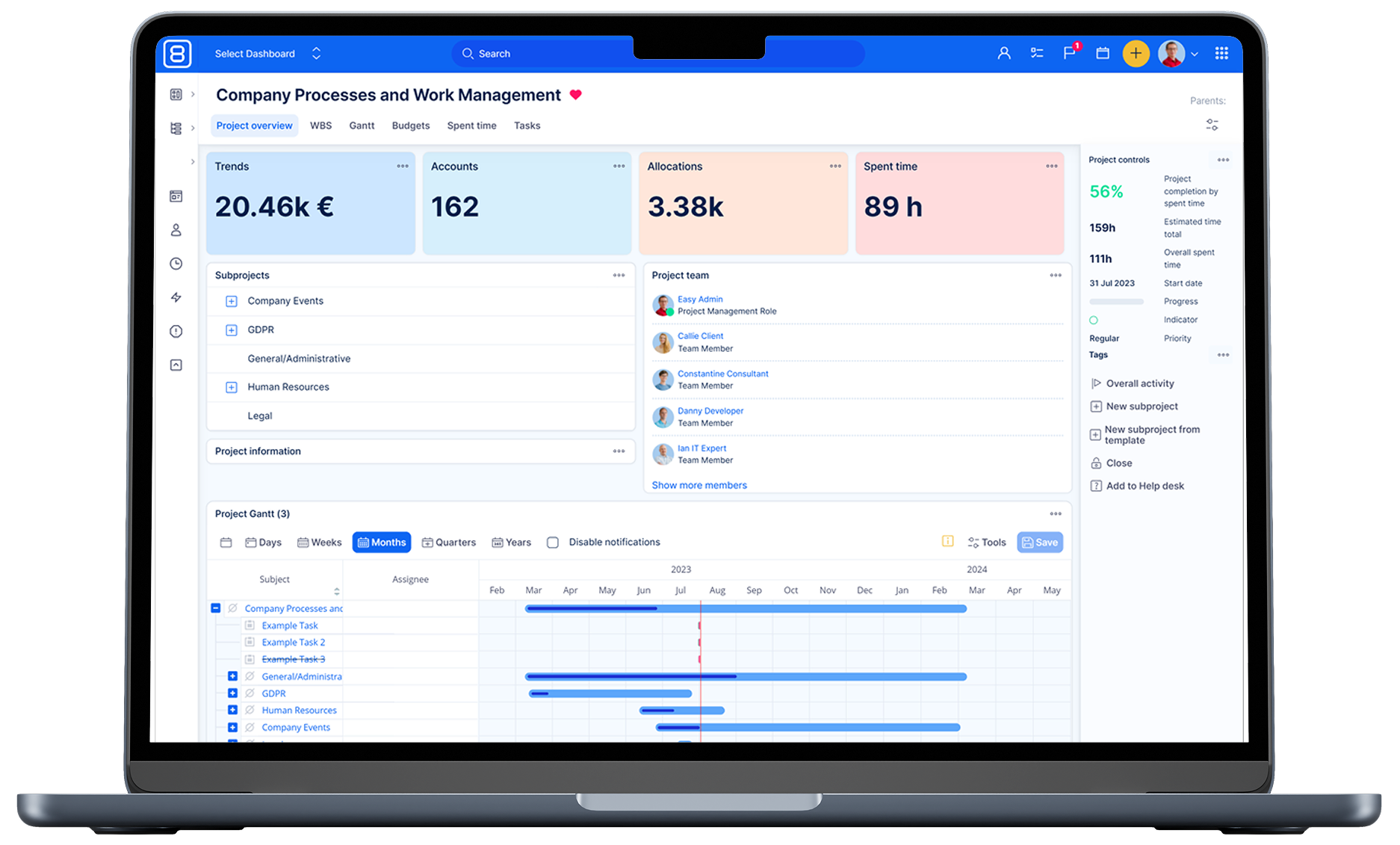
How we used Scrum to create PM software with Scrum Boards
The need for effective Agile tools, especially Scrum Boards has become increasingly crucial in our Easy Software team. Explore why and how our team has developed its own Scrum Boards to better serve our clients.

Table of contents
Need for speed (and Scrum Boards)
Integrating Scrum Boards into the project management tool
Easy Software at Scrumboards.org podcast
Improvement and results by applying Scrum Boards
Need for speed (and Scrum Boards)
Before adopting Scrum Boards, our team in Easy Software encountered numerous challenges that impeded efficient software development. We have indicated several issues:
- tracking with Kanban visualization was ineffective, and creating tasks was complex and time-consuming due to the numerous fields required,
- our backlog management was disorganized,
- the client feedback process involved a lot of manual transcriptions from paper notes,
- breaking down large tasks into subtasks was cumbersome.
Our team has concluded that we need a Scrum Board to improve the software development process.
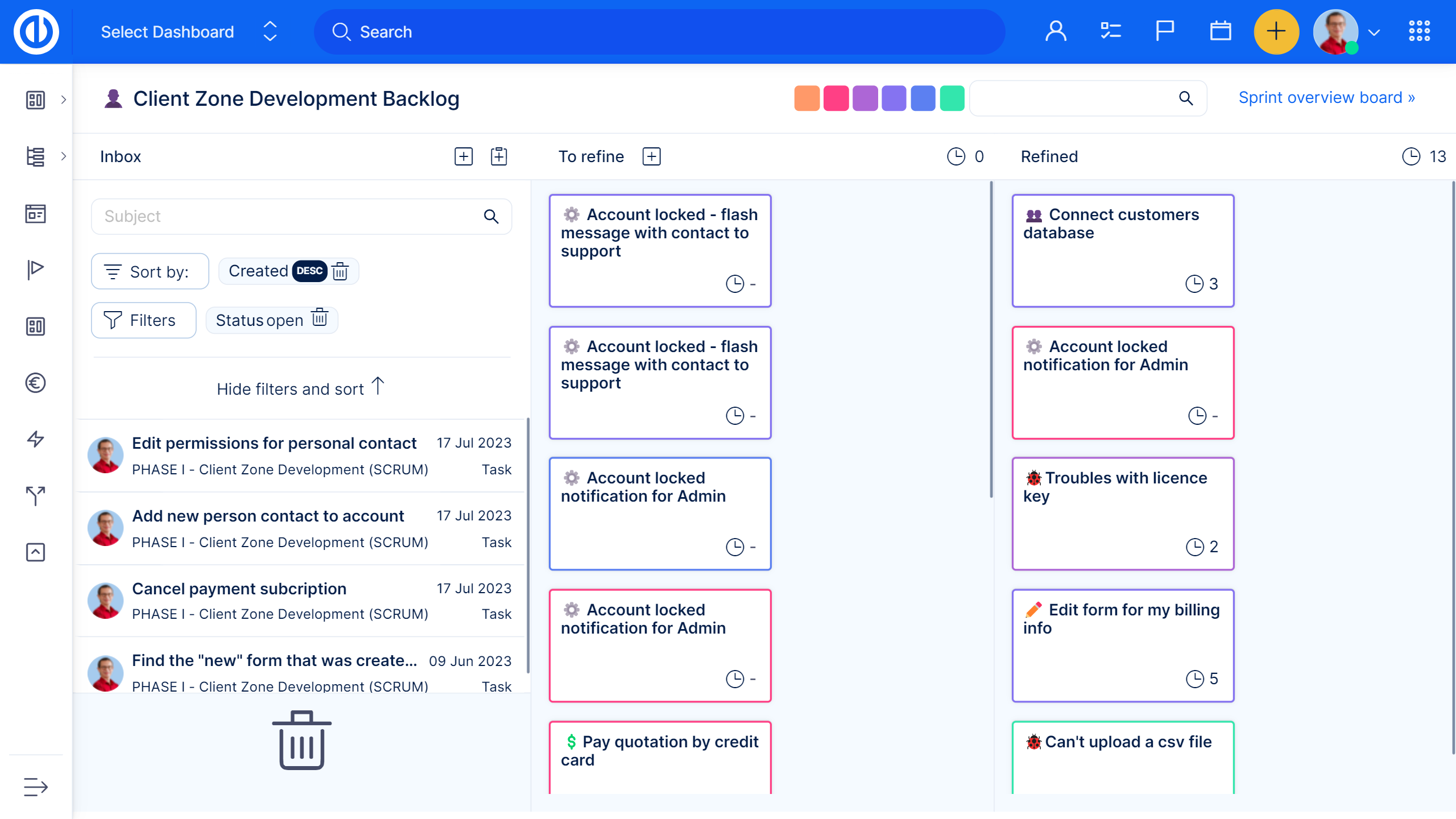
Product Backlog Board in Scrum Boards
Integrating Scrum Boards into the project management tool
In partnership with a certified Scrum Master, Karel Smutný, we have crafted three dedicated Scrum boards, empowering efficient Scrum rituals and optimizing the utilization of Scrum roles.
The key features of Easy8's Scrum tool include the following:
- Product Backlog Board
- Sprint Overview Board
- Team Sprint Board
The outcome was more than positive. We managed to adopt this agile tool into the software development process. To find concrete improvements and to demonstrate the benefits brought by this Agile methodology, read the whole case study about enhancing the delivery phase with Scrum (one of our project management case studies).
Easy Software at Scrum.org podcast
Easy Software was featured in a podcast hosted by Scrum.org. The team, which included CEO Filip Morávek, Product Owner Jan Řeřicha, and already mentioned Professional Scrum Trainer Karel Smutný, shared their journey with Scrum. We discussed how our colleagues have been using Scrum to develop and enhance our project management tool, Easy8.
Listen to the podcast to discover what are the benefits of using Scrum (not just for developers) for management and task management.

Easy Software at Scrum.org podcast
Improvement and results by applying Scrum Boards
Implementing Scrum Boards has had a significant positive impact on our team and project management. Developer and Product Owner satisfaction has markedly improved, as evidenced by our eNPS scores. Key performance metrics in sprint management have shown notable progress. The achievement of sprint goals increased from 60% to 85%.
Furthermore, only 15% of work now carries over to the next sprint, reflecting better planning and execution. Overall, the adoption of Scrum Boards has enhanced collaboration, task management, and team satisfaction.
Try project management software Easy8 and its Scrum Boards that play a crucial role in visualizing the project's progress and fostering team collaboration.
Frequently asked questions
What does Scrum mean?
In software development, Scrum is a lightweight framework for developing, delivering, and sustaining complex products. Scrum is a framework, not a methodology. It provides a structure for teams to work within, but does not prescribe specific practices. Scrum teams are self-organizing, with no imposed hierarchy. The key roles are the Product Owner, Scrum Master, and Developers. The core idea behind Scrum is to break down complex projects into smaller, manageable "sprints" of work with frequent feedback and adaptation.
What is a Scrum board?
A Scrum board is a visual tool in Agile project management that helps track tasks during a Scrum sprint, which usually lasts 1-4 weeks. It has columns like "To Do," "In Progress," and "Done." Tasks are shown as cards or sticky notes that move across these columns as work progresses.
This board gives everyone a real-time view of the team's tasks and current status. It can be a physical whiteboard or digital tool for remote work and real-time updates. It plays a crucial role in Scrum meetings, such as daily standups, sprint planning, and retrospectives, and it keeps the team organized and transparent.

Related articles

Revolutionizing Scrum Workflows: Real user insights into Easy8 13 Scrum Boards
In software development, real-world challenges guide the best innovations. There’s nothing like firsthand experience to steer the product in the right direction. Our Scrum Boards in Easy8 13 reflect this principle. Our team’s challenges, needs, and day-to-day scenarios have shaped them, improved them and helped to streamline their functionality.

When and why Scrum might not work
Scrum is undoubtedly one of the most popular Agile frameworks in product management, particularly in software development. At its core, Scrum promotes adaptive planning, evolutionary development, early delivery, and continuous improvement. Despite its efficiency and flexibility, there are instances where this methodology might not be as effective. Read the scenarios where Scrum may fall short and offer guidance on navigating these challenges.

What is Scrum? Let’s find out.
Today we're going to dive into a popular Agile framework known as Scrum. Scrum is a highly effective framework for product development. Originating in the field of software development, Scrum has now spread its wings to diverse industries due to its ability to enhance teamwork, promote collective responsibility, and focus on delivering the highest value.