What is the best replacement for Jira?
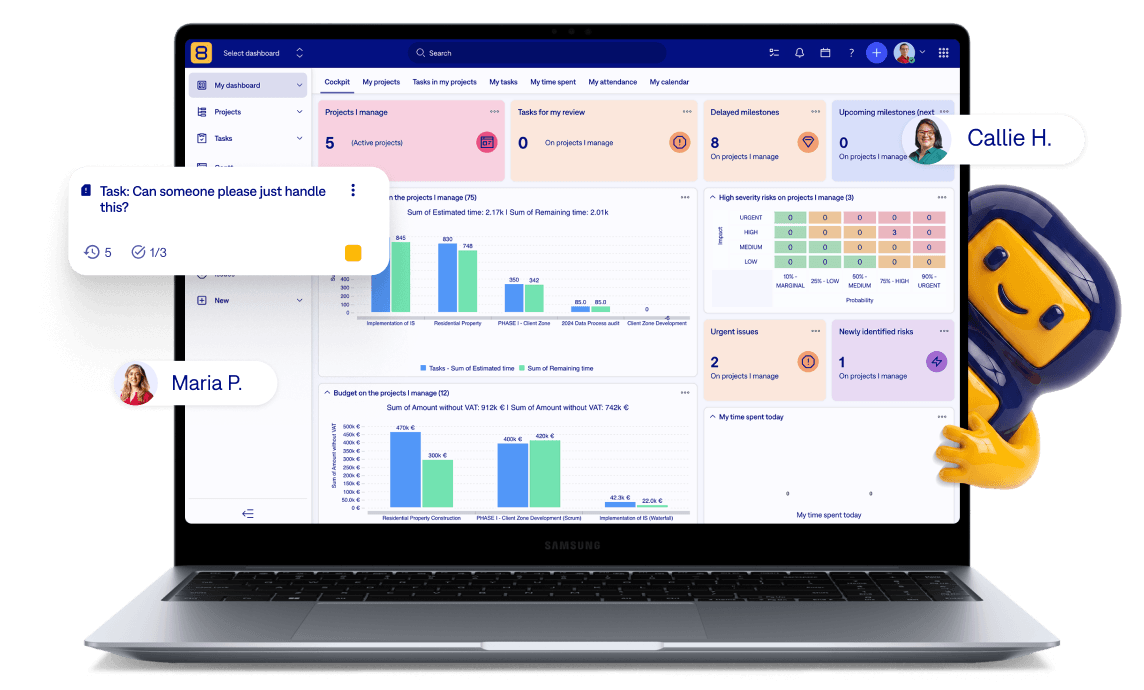
Easy8 is one of the strongest Jira replacements for teams that need more than issue tracking. Unlike Jira, it combines project management, ITSM, software delivery, and knowledge sharing in one platform — no per-module licensing, no fragmented stack.
Teams that lost control of their data when Atlassian ended Server support will find Easy8's on-premises and EU sovereign cloud options a direct answer to that problem. Migration from complex Jira environments is supported, including workflows, roles, and permissions.
What you get with Easy8 instead of Jira:
Unlike Jira, which covers software delivery but pushes you to add Confluence for docs, Jira Service Management for ITSM, and third-party tools for everything else, Easy8 is a unified WorkOps platform. Project management, IT service operations, software delivery, knowledge sharing, and cross-team collaboration are built into one connected environment (with no per-module licensing surprises).
On-premises or cloud — your choice:
One of the most common reasons teams search for a Jira replacement is losing control of their data when Atlassian ended Server support. Easy8 offers both on-premises deployment and EU sovereign cloud, so your data stays where your policies require it.
Related content
Is Jira Data Center on-prem?
Yes, Jira Data Center supports on-premises deployment on your own physical hardware, virtual machines, or Kubernetes clusters, offering full control over infrastructure. It enables both single-node and clustered setups with shared home directories via NFS/SAN for high availability across multiple nodes.
However, with its end of life approaching in March 2029 (no renewals after March 2028), it lacks future support, security updates, or new features.
For sustained high-security on-premises needs, Easy8 provides a viable self-hosted alternative with equivalent scalability, encryption, and Jira migration tools. This shift ensures data sovereignty without Atlassian's EOL risks.
How to migrate Jira database?
Migrating from Jira to another platform can be a complex process, and it typically involves several key steps:
- Assessment and planning: Before starting the migration, it's crucial to assess the current Jira setup, including the number of projects, custom fields, workflows, and any integrations or add-ons in use. This helps in planning the migration strategy and identifying potential challenges.
- Data export: The next step is to export data from Jira. This can be done using Jira's built-in export tools, such as exporting issues to a CSV file. The export should include all necessary data like issues, attachments, and user information.
- Data mapping and transformation: Once the data is exported, it needs to be mapped to the new platform's data structure. This may involve transforming the data to fit the new system's requirements, such as converting custom fields or workflows to the new format.
- Migration tools: Depending on the target platform, there may be specific migration tools available to facilitate the process. For example, if migrating to a cloud-based system, there might be cloud migration assistants or third-party tools that can help automate parts of the migration.
- Testing: Before performing the final migration, it's important to test the process in a staging environment. This helps identify any issues that might arise during the actual migration and allows for adjustments to be made.
- Execution: After successful testing, the migration can be executed. This involves importing the transformed data into the new platform and ensuring that all data is correctly mapped and accessible.
- Validation and cleanup: Post-migration, it's essential to validate that all data has been migrated correctly and that the new system is functioning as expected. This includes checking for any missing data, broken links, or issues with workflows. Any necessary cleanup should be performed at this stage.
- Training and support: Finally, provide training and support to users to help them transition to the new platform. This ensures that they are comfortable with the new system and can use it effectively.
Each migration is unique, and the specific steps may vary depending on the complexity of the Jira setup and the target platform. It's often recommended to work with experienced professionals or solution partners to ensure a smooth migration process.
What is the best Jira alternative?
Many teams seek alternatives due to Jira's complexity, cost, or specific feature needs. Several tools offer compelling options, each with unique strengths suited for different kinds of teams and workflows. Among them is Easy8, which provides open source solutions to 25+ team members.
Organizations considering switching from Jira may find Easy8 particularly appealing due to its hybrid project management capabilities, extensive feature set, greater data control, and lower operational costs—all crucial factors for modern, security-conscious, and cost-sensitive teams.