Introduction
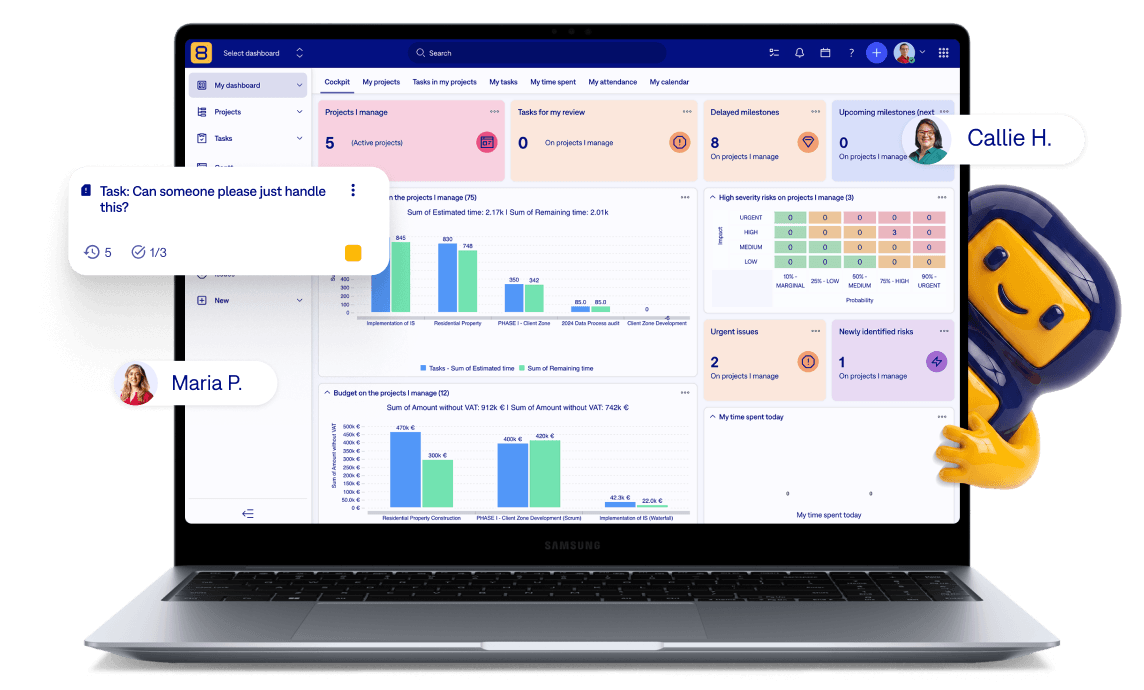
Dashboards in Easy8 allow you to display, track, and analyze data from a wide range of internal system sources. Each widget on a dashboard is connected to a specific entity or module, known as a data source. This reference article lists the supported data sources available for dashboards and what types of information they can represent.
Target Audience
- User
What Are Data Sources?
A data source is the origin of the information displayed in a dashboard widget. In Easy8, data sources are tied to system entities such as tasks, users, projects, time entries, CRM cases, or documents. Widgets like lists, charts, and gauges pull their content based on the selected data source and filters.
Commonly Supported Data Sources
| Data Source | Description |
|---|---|
| Tasks | Includes all task-related data like status, priority, estimated time, etc. |
| Projects | Includes project-level metrics, status, and progress indicators. |
| Users | Used for user utilization, assignments, and workload tracking. |
| Spent Time | Tracks time logged on tasks or other activities. |
| Attendance | Displays attendance records on calendar widgets. |
| CRM Cases | Shows data related to customer relationship management activities. |
| Documents (DMS) | Tracks locked, watched, or pending documents in document management. |
| Risks | Used in the Risk Matrix widget to assess and compare risk items. |
| News & Alerts | Sources for noticeboards and alert-based widgets. |
| Agile Resources | Used in agile dashboards (personal, team, or project-based) |
| Resource Allocations | Provides values for gauges and utilization charts based on planned work. |
| Custom Entities | Additional sources created via plugins or configurations, such as Accounts. |
| Saved Filters | Enables reuse of saved filtered data across widgets. |
Notes on Compatibility
- Each widget supports only specific types of data sources. For example, pie and bar charts typically use entities with numerical or grouped values like tasks or time entries.
- Some widgets (e.g., generic gauge or timeseries) support dynamic data sources, meaning the source value can update based on filters or date selections.
How to Choose a Data Source
- Choose the widget type (e.g., List, Gauge, Chart)
- Select the data source entity from the available list
- Apply filters to narrow down the data you want to display
- Save the widget and review the data output
Conclusion
Easy8 dashboards are powered by flexible data sources that represent all major project, task, resource, and CRM elements. Selecting the right data source is essential for building informative and actionable dashboards.