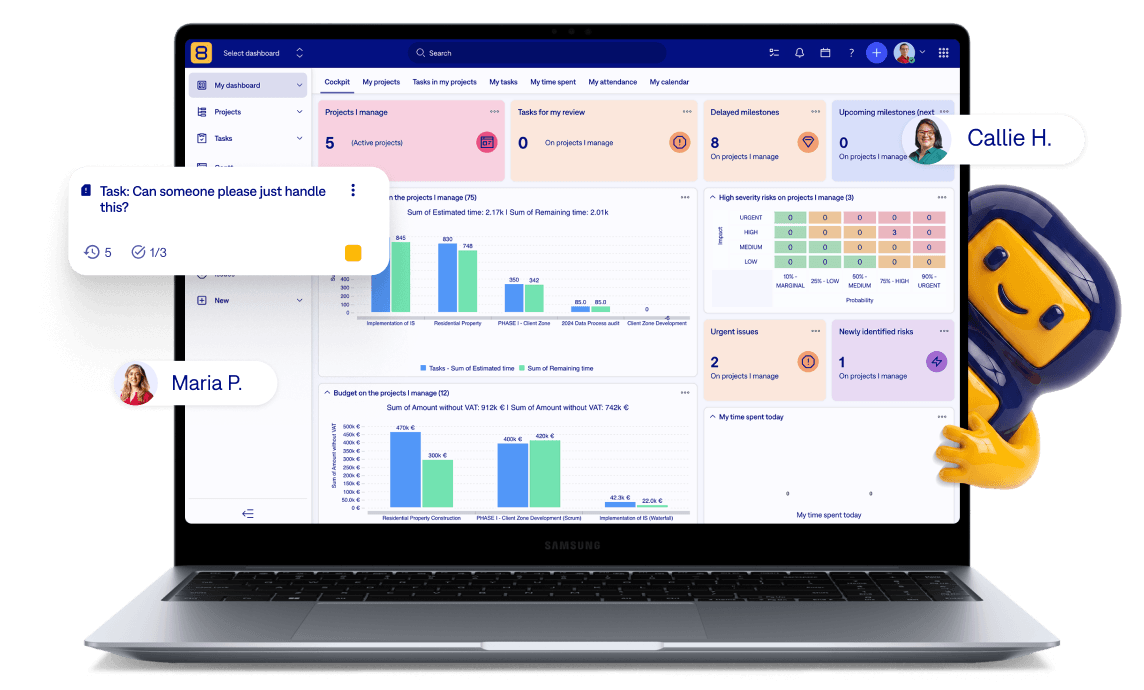
Overview of Project Budgeting in Easy8
Introduction
Project budgeting in Easy8 is a key feature for financial management. It allows you to plan and monitor incomes and expenses on both project and global levels. This article explains the concepts and components behind project budgeting.
Target Audience
User + Administrator
Understanding Project Budgeting
Definition
- Budget Statement: A clear comparison of planned and real incomes and expenses.
- Planned Income and Expenses: Your estimates for the project.
- Real Income and Expenses: Values entered manually or synced from spent time, costs, or invoices.
- Budget Items: Incomes and expenses entered on a project budget page.
- Global Budget Widgets: A way to see and manage budgets across multiple projects.
How It Works
- Each project can have a budget page showing income and expenses.
- Users can enter planned values to set expectations.
- Real values are either entered manually or generated based on time spent and rates.
- Budgets are updated automatically when related project data (e.g. time entries) changes.
- You can view project budgets from the Project Dashboard or from global dashboards like the Budgets feature dashboard.
The budget section usually includes two main parts:
- Budget Items: These are your financial entries. Each item has a name, type (income/expense), planned and real values.
- Statement Section: Shows a total overview. You can compare planned vs. real values by time periods.
Widgets can be used on dashboards to display:
- Incomes/Expenses per project
- Comparisons between planned and real values
- Progress in budgets over time
Examples
- A project manager estimates income of 10,000 € and expenses of 6,000 €. They enter these as planned items.
- As the project runs, 5,000 € in time entries and 1,000 € in invoices are recorded. These are added as real expenses.
- The budget statement now shows a 4,000 € difference between planned and real income, and 0 € difference in expenses.
Corner Situations
Notice
To use properly the following option which can be set in Global menu >> Administration >> Budgets >> Other settings (or per project under its Budgets tab), you must have access permissions to the subprojects to see the data from them, otherwise, they will not be included in the total sums per project tree and you will see incorrect data. Therefore, different users might see different results.
Warning
Dynamic filters are not supported on all Overview pages under the Budgets statement plugin. When dynamic filters are used, incorrect or no data are shown.
Info
In a situation where a project is created from a template, and during creation rates are deleted—resulting in an empty field—the system will automatically apply Global rates for this new project.
Conclusion
Project budgeting in Easy8 helps users keep financial control. By comparing planned and real values, you can see whether your project is on track.
Further Reading
| How would you rate this article? | |||
|