How to Use the Global Budget Dashboard in Easy8
Introduction
This guide will show you how to use the Global Budget Dashboard in Easy8. It covers how to access, configure, and interpret budget data across multiple projects using standard dashboard components like charts, trends, and lists. By following these steps, you will be able to monitor and analyze financial performance globally.
Target Audience
User
Prerequisites
Before starting, ensure you have:
- Access to the Budgets feature in the global menu
- Proper permissions to view financial data across projects
How to View Budgets on the Global Level
Step 1: Open the Global Budget Dashboard
- Go to the Global menu (top-right corner)
- Click on Budgets statement (found in the Business section of the menu)
- You will be redirected to the Budgets feature dashboard
Step 2: Explore Budget Data
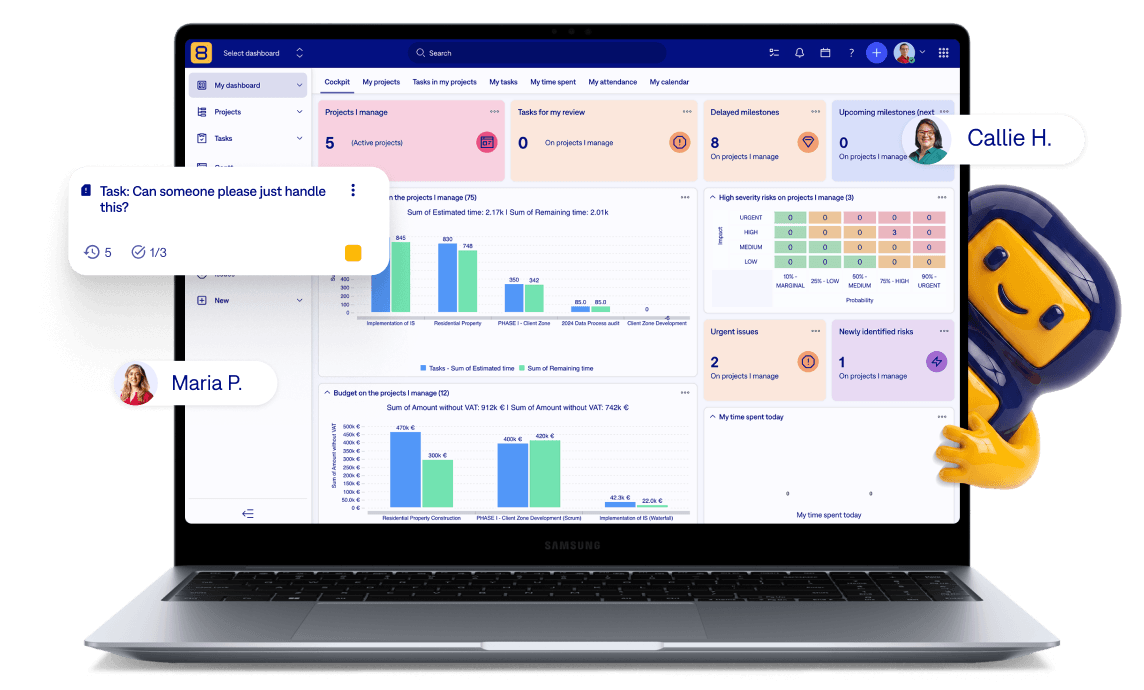
- The Budgets statement dashboard allows you to use standard visual components such as charts, trends, and lists. These are not dedicated budget widgets, but they can be configured to show budget-related data.
To do this, use the Customize button and select one of the standard components. Then, apply filters to display budget entities like 'Planned incomes', 'Real incomes', 'Planned expenses', or 'Real expenses'.
This setup lets you visualize key metrics such as:
- Changes in budget values over time
- Comparisons of planned vs. real income or expenses
- Categorized lists of budget entries across projects
Using these tools, you can tailor your dashboard to monitor financial performance across your entire portfolio.
Step 3: Apply Filters or Adjust Views
- You can apply global filters located at the top of the dashboard. These affect all dashboard components at once and help you filter by project, date, or other criteria.
- Filters are especially useful for narrowing down budget data across multiple projects or time periods without changing individual components.
- Some widgets allow further adjustments, such as switching between incomes and expenses, or grouping by specific categories.
For more detailed information about how filters, widgets, and dashboards work together, see insert article here.
Step 4: Export or Drill Down
- Use the Export button to download data if needed
- Click on specific items in visual components such as charts or trends to open the related project budgets. This feature is called "on-click" and is available on many standard widgets used in dashboards. For example, clicking on a bar in a column chart showing planned expenses by project will take you directly to the budget page of that specific project. This makes it easy to drill down from a global overview to a detailed view with just one click.
Corner Situations
Conclusion
You have successfully learned how to view and analyze budgets on the global level. This allows for better financial oversight across your projects.
Further Reading
- Overview of Project Budgeting in Easy8
- How to Change Planned Incomes and Expenses into Real Ones
- Currency
| How would you rate this article? | |||
|