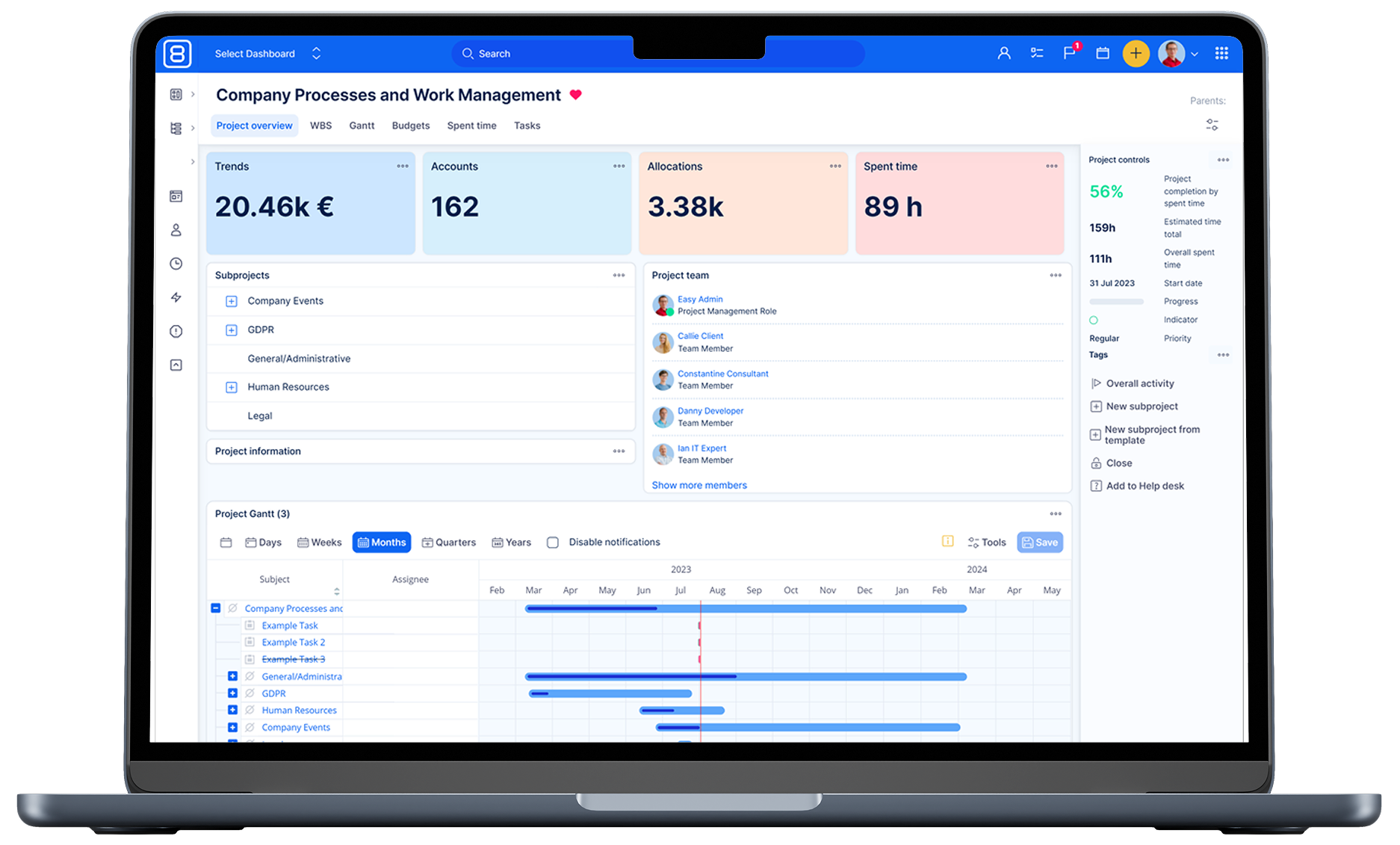
Shadow AI: 5 hidden risks and how to fix them
AI is changing how we work, but shadow AI can introduce hidden risks when employees use AI tools without proper oversight. Before adopting AI at scale, discover the risks to sensitive data and how to stay secure, compliant and in control.

Table of contents
AI is here to stay: But can you trust it?
AI tools vs. data security: 55% hesitate
Why AI adoption needs data control
Five hidden shadow AI risks organisations often overlook
How to address the 5 hidden AI security risks
1. Prevent data exposure from public AI tools
2. Ensure transparency and explainability
3. Reduce regulatory and compliance risks
4. Limit exposure in shared cloud environments
5. Maintain human oversight and accountability
On-premises AI for your project management
TL;DR
Many organisations hesitate to adopt AI due to serious concerns around data security, regulatory compliance, and lack of control—making secure, transparent, and AI on-premises solutions like Easy AI by Easy8 is a trusted alternative.
AI is here to stay: But can you trust it?
From chatbots and assistants to full-scale project and work automation, AI is rapidly transforming how organisations operate. It’s fast, powerful, and increasingly essential. But its adoption is not without hesitation. Many businesses, particularly in regulated sectors like finance, healthcare, defence, or public services, face strict compliance demands and heightened concerns around data security, confidentiality, and accountability.
When AI systems rely on opaque algorithms or external infrastructure, the risk of misuse, data breaches, or even industrial espionage becomes a serious barrier to adoption.
AI tools vs. data security: 55% hesitate
Deloitte reported, that 55% of organisations avoid certain AI use cases due to concerns over data security and privacy. The recent boom of AI tools (often cloud-based and trained on massive datasets) has made it harder to distinguish between innovation and risk.
Why AI adoption needs data control
Even cloud giants are adjusting. Microsoft recently announced “Microsoft 365 Local,” a version of its cloud suite tailored for specific European markets, designed to address growing concerns around digital sovereignty and regulatory pressure.
With this move, Microsoft is showing that even cloud-based services need to change by offering more control over data and local storage to meet the needs of European governments and businesses. It's a clear indication: the future of AI and cloud isn’t one-size-fits-all.
Flexibility, control, and trust are becoming just as important as functionality.
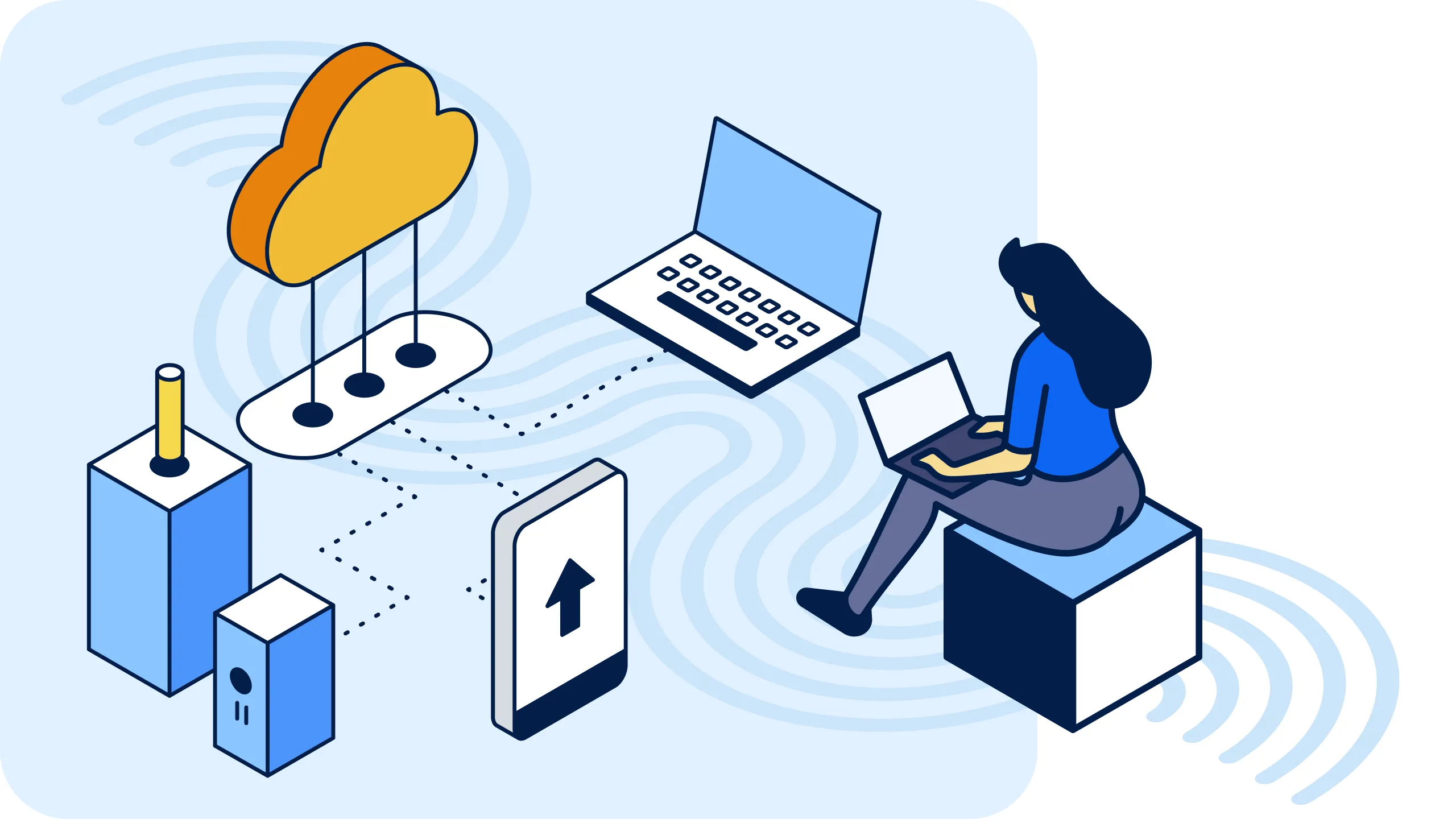
The message is clear: AI adoption should not come at the cost of data security. But identifying where the risks actually lie is the first step.
Five hidden shadow AI risks organisations often overlook
Here are five often-overlooked security threats that can quietly undermine your AI strategy—especially if left unaddressed.
- Data security gaps in third-party AI tools: Using consumer-facing AI tools to operate on internal or client data—even casually—can result in that data leaving your environment and being stored or processed in unknown ways.
- Prompt injection in your everyday work data: Prompt injection is an attack where hidden instructions inside a document, ticket or email trick an AI assistant into ignoring its rules and exposing or acting on data it should never touch. In a project tool this is a shadow AI problem, not a developer one: any AI agent that reads your tasks, comments and attachments can be steered by anyone who can write into them.
- Lack of transparency in AI-generated outputs: Many LLMs provide answers without showing how they arrived at them. In regulated industries, this lack of transparency is not just a red flag—it’s a compliance issue. When decisions are made or supported by AI, you need an audit trail.
- Regulatory exposure (GDPR, NIS2, AI Act): The EU AI Act, GDPR, and NIS2 are tightening controls on how data is handled and who is responsible for AI-driven outcomes. Non-compliance isn’t just theoretical, it can result in serious fines and operational restrictions.
- Shared cloud environments increase your security risk: When you use public cloud services, your data often shares space with other companies’ data. This shared setup can make it easier for mistakes or breaches to happen—like someone gaining access through a misconfigured setting. A recent ransomware attack resulted in the leak of over 1,200+ AWS cloud credentials used to encrypt S3 buckets. And even if your data is encrypted, it might still pass through systems you don’t fully control.
- Lack of accountability and human control: Automated decisions without clear human oversight can lead to errors that are hard to trace or correct. Without the ability to control, verify, or override AI-generated actions, your organisation could be exposed to both operational and legal risks.
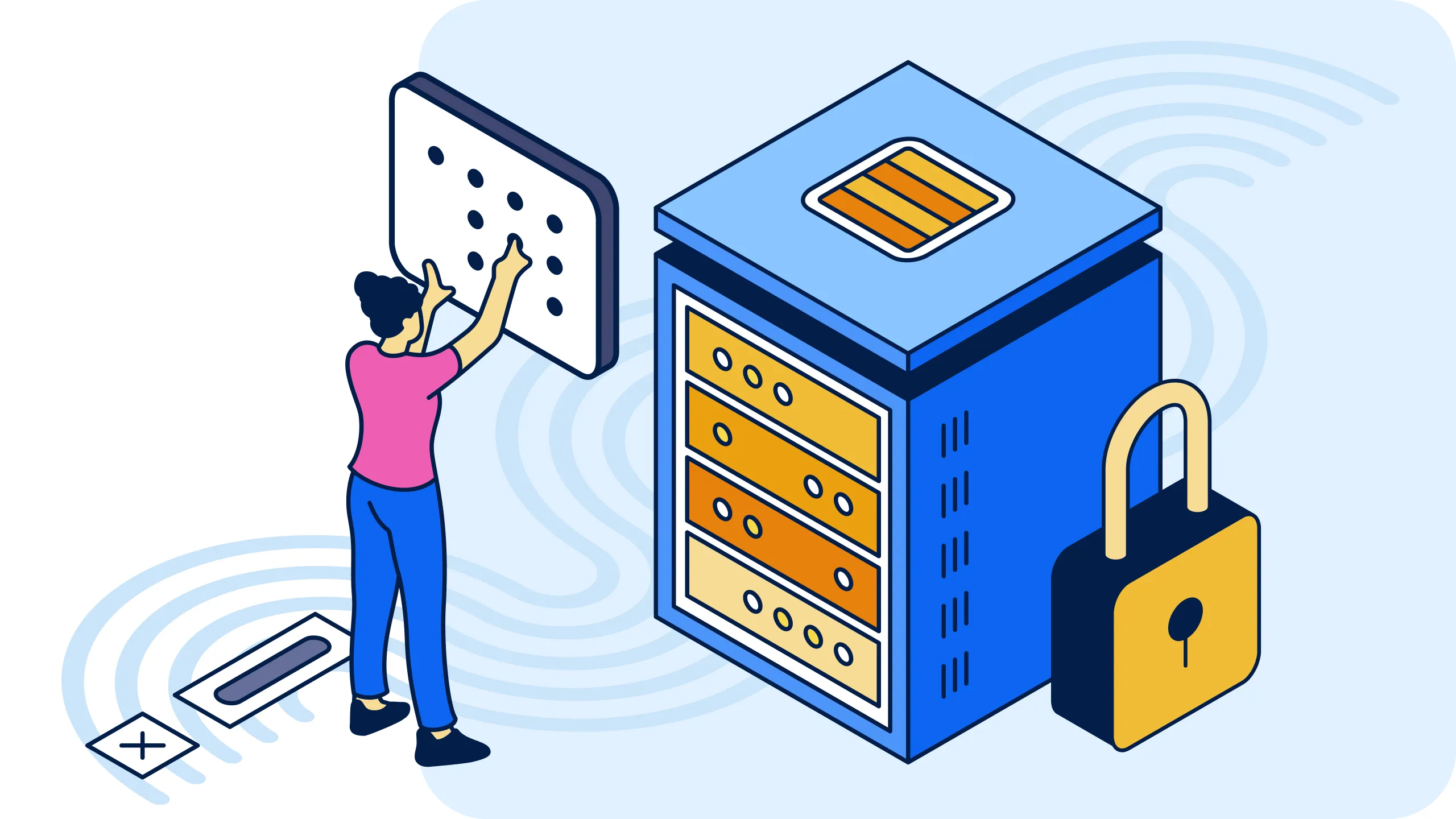
How to address the 5 hidden AI security risks
To help teams stay both innovative and compliant, we’ll explore five practical rules that every organisation should follow when deploying AI tools, especially in project and work management and data-sensitive operations:
1. Prevent data exposure from public AI tools
Avoid feeding sensitive information into public AI platforms—doing so may expose your data to unclear processing or storage practices. Some platforms, like ChatGPT, offer the option to disable training on user data, but relying on such settings still means placing trust in an external system.
For organisations with higher security requirements, it may be worth exploring alternatives like on-premises deployment, private cloud environments, or even running a language model directly within your own infrastructure. While these options require more internal capacity, they offer greater control over how data is processed and protected.
2. Ensure transparency and explainability
To build trust in AI outputs, systems must go beyond black-box behavior. Every AI-generated statement or recommendation should be supported by clear citations or references to its source data. This makes decisions understandable, traceable, and auditable—especially crucial in regulated environments or when AI supports critical operations.
3. Reduce regulatory and compliance risks
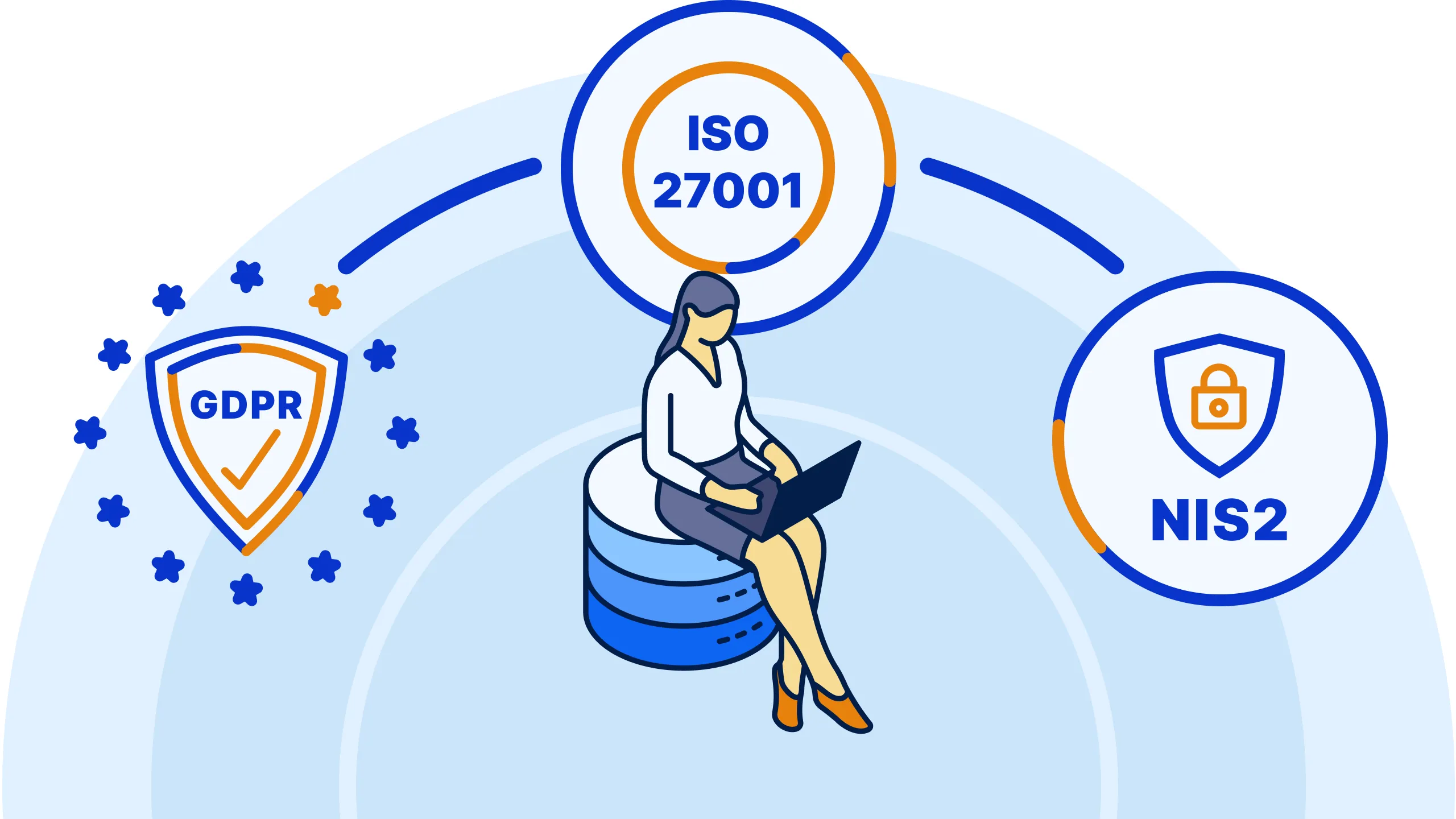
Make sure your AI tools support GDPR, NIS2, ISO 27001 or other relevant regulations. Look for vendors who offer EU-hosted or sovereign cloud options, and can provide clear documentation and audit trails. Proactively building compliance into your AI strategy can prevent future headaches as regulations tighten.
4. Limit exposure in shared cloud environments
While public cloud AI tools are widely available, they come with shared infrastructure and therefore increased risk.
Whenever possible, opt for dedicated cloud environments, or better yet, on-premises solutions for high-risk or regulated data. Even within cloud setups, prioritise encryption, access controls, and vendor transparency.
5. Maintain human oversight and accountability
AI should support and not replace the decision-makers. Ensure that AI suggestions or automations are always subject to review, approval, or override by authorised users. Tools should allow for role-based permissions and make it clear who initiated or approved each AI-driven task or outcome.
These are foundational steps toward safe and compliant AI adoption—especially for organisations working with sensitive data, regulated environments, or large project portfolios.
On-premises AI for your project management
If you're looking for a solution that already incorporates these principles, Easy AI and on-prem agentinc AI, Aura, by Easy8, is one example of how AI can be deployed responsibly. We offer flexible hosting options, full auditability, and built-in controls that keep your data protected and your team in charge.
Curious? Watch the webinar recording to see how AI agents can enhance your security strategy in real time.
Ready to explore how AI fits into your project management? Reach out to our sales team for more details. We’re here to support your AI adoption journey!
Frequently asked questions
How much does Jira cost per year?
There is no single annual price for Jira: it depends on the plan you choose and how many users you have. Jira Cloud is free for up to 10 users, and on paid plans list pricing works out at roughly $78 to $95 per user per year on Standard and $145 to $175 on Premium, so a 300-person team pays around $23,500 a year on Standard or $43,500 on Premium.
What will replace Jira?
Atlassian still actively develops and sells Jira, but many teams are choosing other tools instead, depending on their needs (speed, cost, DevOps integration, self‑hosting, etc.). As a relevant full-stack Jira alternative, Easy8 can be considered.
How much will Atlassian Data Center prices increase in 2026?
Atlassian raised Data Center list prices by 15% across all user tiers for Jira, Confluence and Jira Service Management, effective 17 February 2026. Customers on legacy "advantaged" pricing saw larger rises, around 25% on average for Jira and up to roughly 40% depending on user tier.
The upcoming pricing update effective October 13, 2026, hits Atlassian Cloud products, with standard list price increases generally ranging from 3% to 10%. This rollout affects all new purchases, renewals, and plan upgrades.
What is an open-source alternative to Jira and Confluence?
The best-known open-source alternative to Jira and Confluence is Easy8, which builds on the open-source Redmine core and combines issue tracking, project planning, and a built-in wiki in one application, so it replaces both tools at once.
What does DORA stand for?
DORA stands for the Digital Operational Resilience Act.It is a European Union (EU) regulation designed to ensure the financial sector can withstand, respond to, and recover from severe information and communication technology (ICT) disruptions and cyberattacks.

Related articles

Unleash automation power: Easy8 is now on n8n Cloud!
Struggling with disconnected tools and repetitive tasks? AI agents can turn your chaos into smart, automated workflows. Learn how Easy8’s official node in n8n Cloud connects your data to real automation. Fast and with the flexibility that your business needs.

Why on-premises and data sovereignty are non-negotiable in defense industry
When national security and innovation rely on your data, handing control to third-party clouds isn’t just risky—it’s reckless. For defense leaders, choosing on-premises or EU Sovereign Cloud solutions is no longer a technical preference, but a strategic necessity to protect critical operations, intellectual property, and compliance.

The first AI on-premises in project management software
Artificial intelligence has revolutionized various sectors, and project management is no exception. The emergence of on-premises AI project management software offers unique advantages distinguishing it from cloud-based solutions. Explores the uniqueness of Easy AI on-premises in project management and its benefits.