What is meant by collaborative management?
Collaborative management refers to a decentralized leadership approach where decision-making involves input from all team members, rather than top-down directives from a single authority. This methodology fosters shared responsibility, open communication, and collective problem-solving to drive organizational goals.
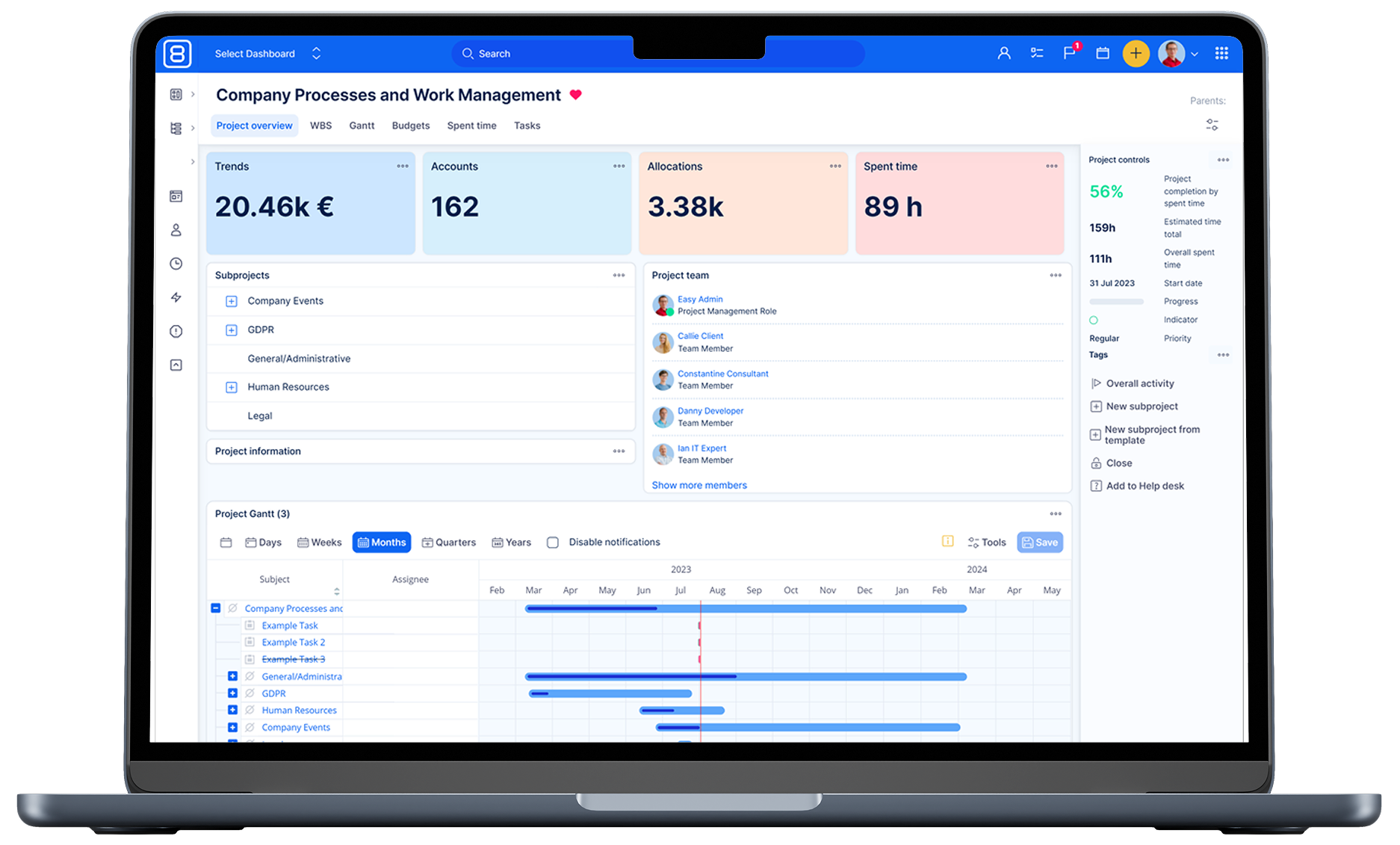
Unlike directive management, which imposes unilateral instructions, collaborative management emphasizes persuasion, participation, and delegation. It contrasts with traditional models by prioritizing collective productivity over individual tasks, often supported by tools like shared dashboards. This style suits modern, hybrid work environments, boosting fulfillment and revenue.
Related content
Do we need to abandon our existing tools to implement WorkOps?
Absolutely not. WorkOps acts as an intelligent orchestration layer above your existing tools, making them work together more effectively. Whether you use Jira, Easy8, Microsoft Teams, SAP or Hubspot, WorkOps enhances rather than replaces your tech stack.
Is WorkOps just another project management methodology?
No, WorkOps isn’t just another project management methodology. It’s a framework. Imagine an ecosystem of work that blends both work and operations into a single framework. Instead of separating project delivery from day-to-day operations, WorkOps unifies them, enabling methodologies like Agile and Waterfall to coexist and ensuring continuous flow across the entire organisation.