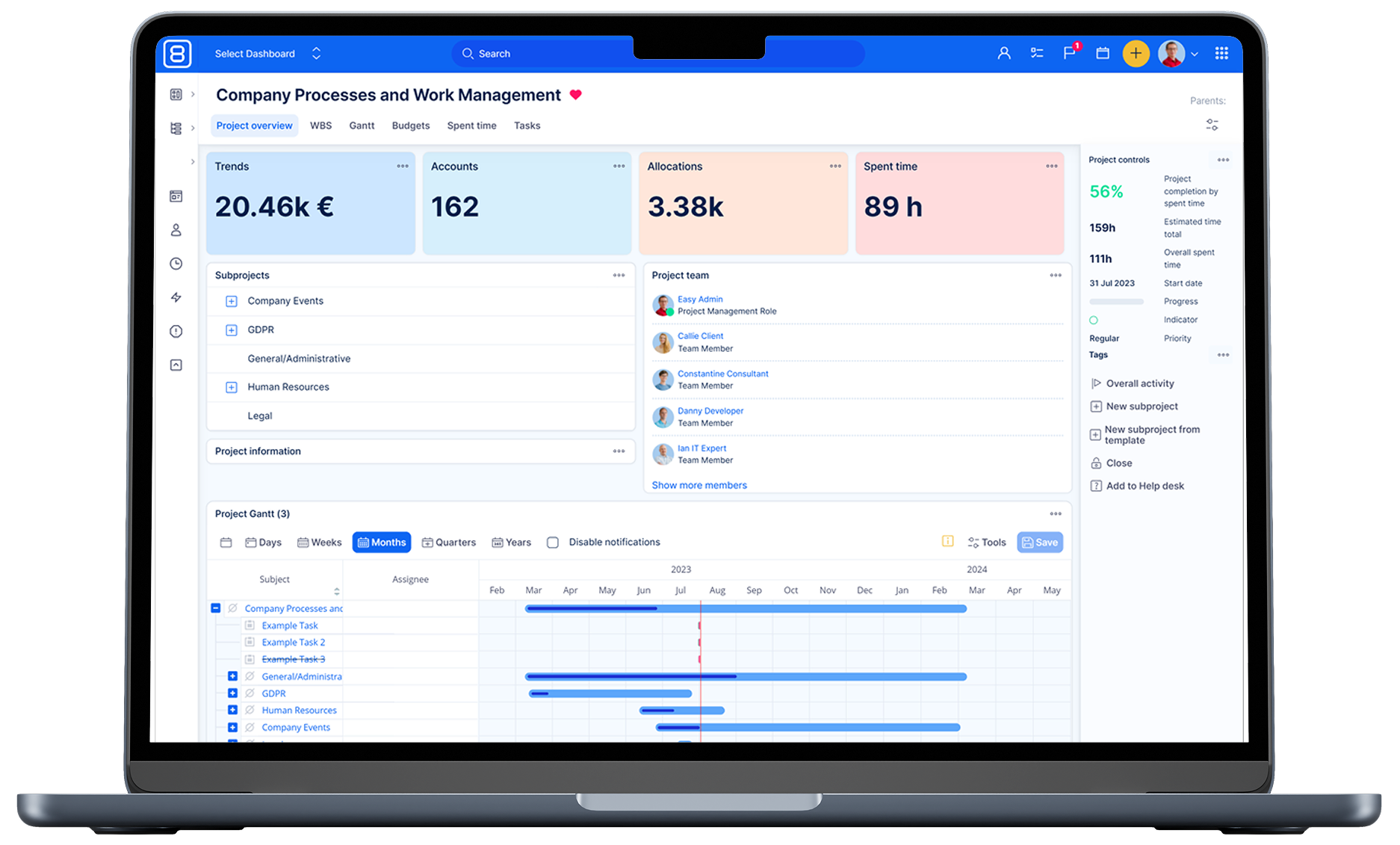
How does hybrid project management support rapid project delivery?
Hybrid project management (Waterfall & Agile) supports rapid project delivery by combining the structured planning and control of traditional methodologies (predictive) with the flexibility and iterative responsiveness of agile methods.
This blend allows teams to plan well-defined phases where sequential progress is essential, while simultaneously enabling quick adaptations and rapid iterations in project aspects that require agility.
Key ways hybrid project management promotes rapid delivery:
- It provides flexibility and adaptability, allowing teams to respond promptly to evolving requirements, resource changes, and project scope adjustments without losing momentum.
- It uses iterative development and sprint planning alongside structured milestones, enabling continuous progress and faster delivery cycles.
- Visual tools such as Kanban boards enhance workflow visibility and streamline task prioritisation, reducing bottlenecks and promoting continuous improvement.
- The integration of predictive and adaptive practices supports effective risk management and stakeholder engagement through regular feedback loops and clear updates.
- This approach balances governance and control with agility, which is particularly beneficial in regulated or complex projects, leading to reduced delivery times by up to 30% while maintaining quality standards.
Related content
What is a key characteristic of hybrid project management?
A key characteristic of hybrid project management is tailored flexibility. This approach allows project managers to customize their methodologies based on the specific needs of each project, rather than adhering to a rigid framework. By blending elements from both traditional (waterfall) and agile methodologies, hybrid project management enables teams to adapt processes dynamically to meet evolving project requirements and stakeholder expectations.
Additionally, hybrid project management incorporates a phased structure, providing a roadmap with defined milestones while also promoting iterative progress, similar to agile practices. This combination enhances responsiveness and facilitates continuous assessment throughout the project's lifecycle.
What is a hybrid project life cycle?
A hybrid project life cycle is an approach that combines elements from both traditional project management methodologies, such as waterfall, and agile methodologies. It provides a flexible framework that allows project teams to tailor their processes based on the specific needs and constraints of the project.
What is hybrid project management?
Hybrid project management is an integrated approach that combines elements from both traditional project management methodologies, such as Waterfall, and Agile methodologies. This method aims to leverage the strengths of each approach to better suit the specific needs of a project, allowing for flexibility and adaptability throughout the project lifecycle.