What are the disadvantages of GitLab?
While GitLab offers benefits like built-in CI/CD tools and self-hosting, it also has drawbacks, including a slower interface and frequent bugs that affect usability and reliability. Some enterprise-level features are missing, repository management can be problematic, and the platform has fewer third-party integrations compared to GitHub.
Additionally, its complexity results in a steep learning curve, and its emphasis on stability can slow down deployment processes.
Performance and reliability issues
GitLab's interface can be noticeably slower compared to competitors, particularly when working with large repositories or complex projects. Users frequently report experiencing bugs that impact day-to-day usability and reliability, which can disrupt workflow and productivity. These performance issues become more pronounced as team size and project complexity increase.
Limited enterprise features and scalability concerns
Despite positioning itself as an enterprise solution, GitLab lacks certain advanced features that larger organisations require. Repository management can be problematic, especially when handling multiple projects simultaneously or managing permissions across large teams. The platform's architecture sometimes struggles to scale efficiently for enterprise-level operations.
Integration ecosystem limitations
Compared to competitors like GitHub, GitLab has a significantly smaller ecosystem of third-party integrations. This limitation can force teams to build custom solutions or workarounds, increasing development overhead and maintenance costs. Organisations that rely on diverse toolchains may find GitLab's integration capabilities restrictive.
Steep learning curve
GitLab's complexity presents a substantial barrier to entry for new users. The platform attempts to be an all-in-one DevOps solution, which results in an overwhelming interface with numerous features that can be difficult to navigate. Teams often require extensive training and onboarding time before becoming productive, which impacts implementation timelines and costs.
Project management limitations
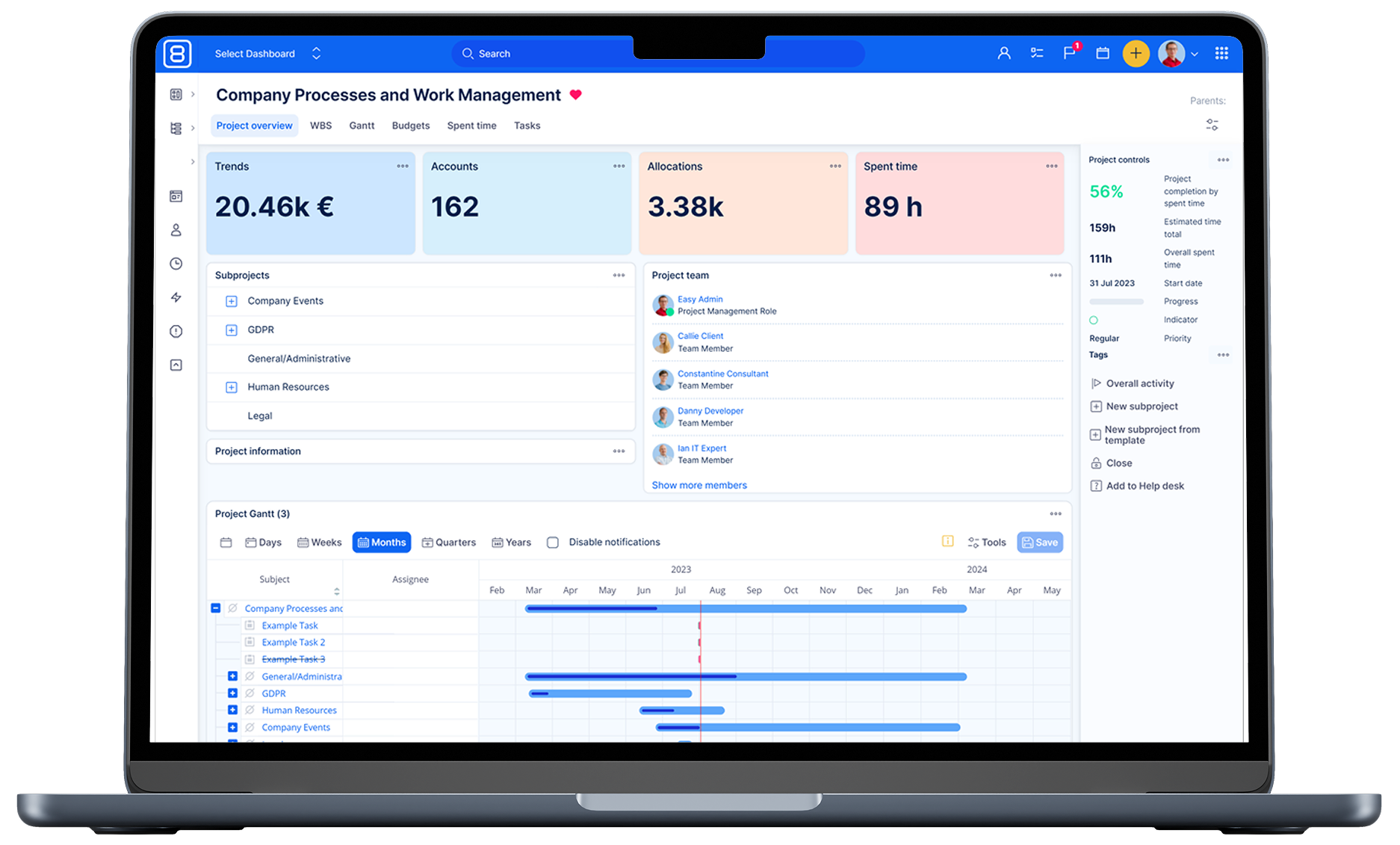
For teams seeking comprehensive project management capabilities beyond code repository and CI/CD, GitLab's project planning and tracking features can feel basic. The platform lacks advanced resource management, time tracking, and budget planning tools that dedicated project management solutions provide, making it less suitable for managing complex, multi-disciplinary projects.
Ready to explore a more comprehensive solution? Compare Easy8 vs. GitLab to see how a dedicated project management platform can address these limitations.
Related content
Can I use both GitHub and GitLab?
Yes, you can use both GitHub and GitLab on the same machine. Both platforms utilize Git for version control, allowing you to manage different projects across these platforms simultaneously.
Does GitLab have a Gantt chart?
GitLab does not have a traditional Gantt chart feature. Instead, GitLab offers a timeline view specifically for epics, which is similar to a Gantt chart but more limited in scope.
Can GitLab be used for project management?
For project management, Easy8 is the top choice with advanced planning, reporting, and resource management tools.
On the other hand, if your focus is on code repository management, CI/CD pipelines, and DevOps, GitLab remains an excellent solution. For a perfect synergy, you can integrate Easy8 with GitLab, combining advanced project management with robust version control and CI/CD automation. This integration allows development teams to manage code repositories in GitLab while planning and tracking projects seamlessly in Easy8.