Partner Success: The Cloudogu and Easy8 Story

IT services
Germany
SMB
Cloudogu, based in Braunschweig, Germany, empowers clients by reducing dependency on infrastructure providers and software vendors. With a team of 65 experts, they combine open-source innovation with agility and DevOps to simplify software deployment and maintenance.
In a short interview, the Cloudogu team shared more about their journey and the keys to their success
What made you explore Easy8?
Our clients expressed an interest in Easy8. It was selected due to its ability to handle dynamic software and licensing structures and adapt to various workflows and processes. The tool is also suitable for large projects, as development plans and priorities can be scaled accordingly. Additionally, the software meets strict security requirements for handling sensitive data.
The list of software in your Dogu toolset is extensive, and our software is among them. Can you elaborate on the advantage of having Easy8 integrated into DevOps workflows? How does it help your clients?
Project and ticket management are crucial elements in modern software development. It’s essential to have a usable and flexible PM tool that can be seamlessly integrated into the existing tool landscape. Easy8 offers many valuable features and can be easily incorporated into workflows. This flexibility makes Easy8 the perfect addition to the tools on our LowOps platform.
You have been very active in the German public sector, among many others. What makes you successful in this area?
We have supported several public agencies in implementing Easy8. Our success is based on our commitment to fully understanding and meeting our clients' needs, as well as our extensive experience with the tool. This allows us to highlight Easy8’s strengths during the initial phases and offer targeted consulting and training during implementation as needed.
Another advantage is our long-standing collaboration with Easy8, which enables us to respond to clients' individual requirements effectively, such as integrating with Outlook.
Explain three key elements that make Easy8 work for the German public sector.
- The tool itself: Easy8 is open-source but offers a user-friendly interface and is highly customizable.
- Through the solid collaboration between Cloudogu and Easy8, individual customizations can be implemented promptly when needed.
- The high degree of customization in Easy8 can be “overwhelming” at times. With our experience, we provide clients with assurance from the beginning that the tool will meet their specific needs precisely.
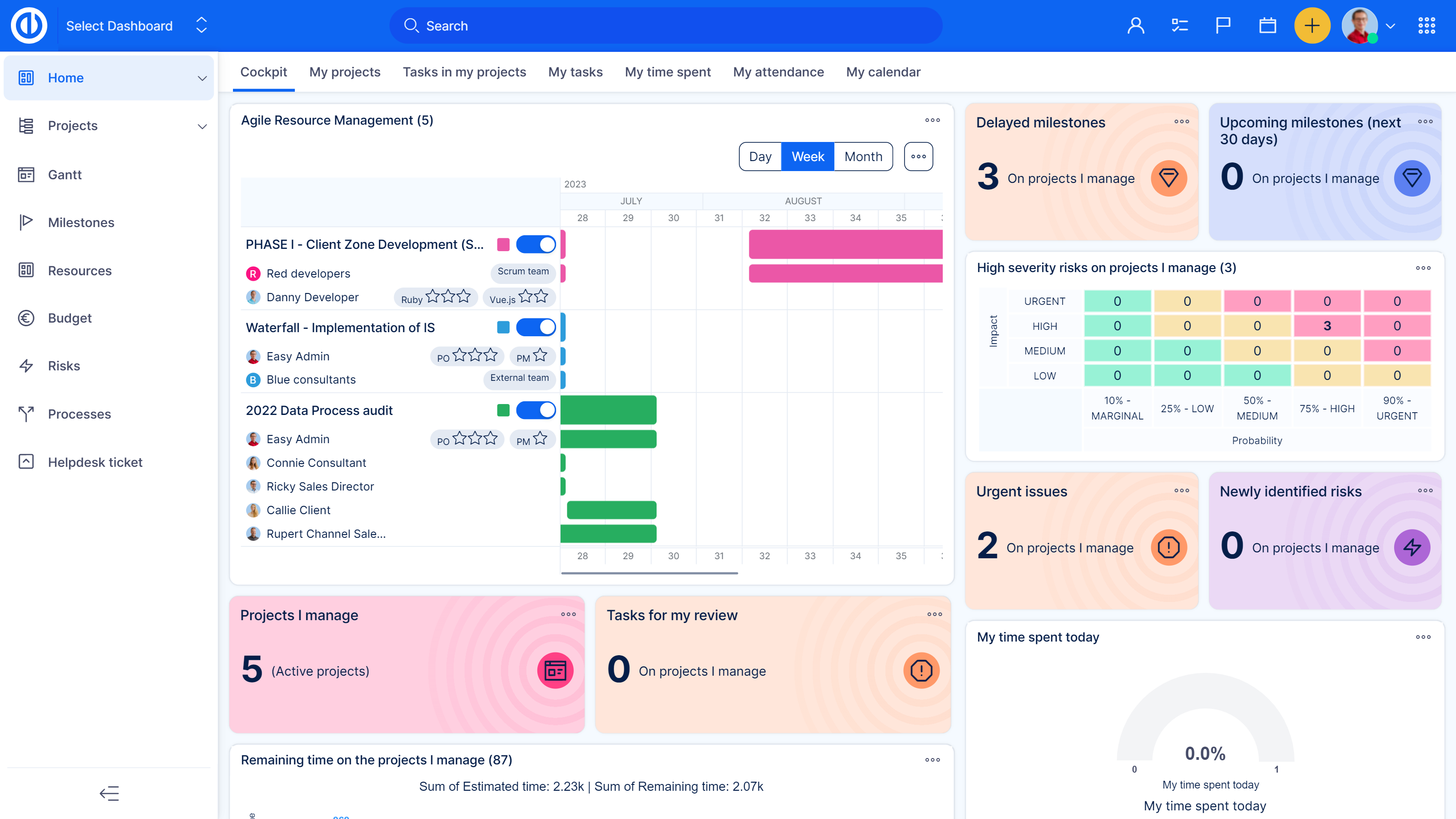
customizable dashboard for tracking results
You have years of experience, both good and challenging. What makes selling Easy8 to the public sector difficult?
This isn’t specific to the public sector, but sometimes the requirements simply cannot be met. In some cases, the licensing model doesn’t fit—clients have asked us about “light users,” for example.
Your teams have extensive experience with Easy8. Imagine there’s a potential client reading this interview, considering engaging with one of Easy8’s partners. How do you approach someone considering implementing Easy8?
We focus on understanding the client’s requirements. We offer a comprehensive package of licenses and modules to meet those needs. We don’t simply provide licenses and “run away”; instead, we offer assistance with Easy8 setup as needed. We provide a German-speaking contact for support issues and help resolve any potential language barriers. We also offer consulting support for support cases, troubleshooting configuration or usability issues if necessary. And thanks to our strong relationship with Easy, we can submit feature requests if clients’ needs are not yet fully met by the software.
We spent some time discussing the public sector, but Cloudogu delivers to many other industries. Please describe aspects or skills during Easy8 delivery that are similar in both public and private sectors.
First and foremost, the client’s needs are central in both cases, requiring an individual approach—listening, asking the right questions, and matching them with the optimal solution.
Other key aspects include:
- The evolving nature of digitization: Both sectors now have more options available, leading to a more thorough evaluation of alternatives, which requires patience (if a public tender is not required).
- Increasing need for data protection: Both sectors require secure and reliable solutions.
- Growing price sensitivity in both sectors.